


Estácio Valoi & Jerry Maquenzi For years, the Namanhumbir case has been held up as a rare example of a multinational holding a multinat
Estácio Valoi & Jerry Maquenzi
For years, the Namanhumbir case has been held up as a rare example of a multinational holding a multinational accountable for human rights abuses committed in Africa. The dominant narrative, widely disseminated by international media, described the out-of-court agreement between the mining company Gemfields and Mozambican victims as a historic milestone: a millionaire compensation, negotiated in London, which would bring some relief to families affected by the violence associated with the exploitation of rubies in Montepuez, Cabo Delgado.
However, a careful reading of contract documents, combined with the direct testimonies of beneficiaries of compensation, raises serious doubts about the way in which this process was conducted and whether the promised reparation was fully materialized in the lives of the victims.
Foto: Estacio Valoi
This article does not intend to rewrite the judicial process or impute criminal guilt. Its objective is more circumscribed, but no less important: to question, based on documents and testimonies, whether there was coherence, transparency and substantive justice in the implementation of the agreed compensations, and whether the so-called transnational justice did not end up reproducing, on a new scale, already existing inequalities.
Framing and Transparency Note
To ensure balance and analytical rigor, this article incorporates, throughout the thematic sections, excerpts from Leigh Day’s formal response to the questions raised by the documentary findings and the victims’ testimonies. Instead of presenting the answers in a separate section, it was decided to integrate the main points of the institutional position at the end of each relevant section, contrasting them with the data analysed. This option aims to allow the reader to evaluate, in a direct and contextualized way, the convergences and divergences between the official version of the firm and the experience reported by the beneficiaries or victims.
The Context: Violence, Litigation, and the Promise of Justice
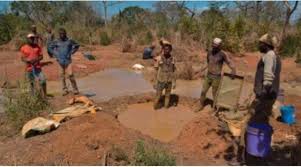
The abuses associated with the mining of rubies in Montepuez have been exposed to the international public by journalistic investigations conducted by, among others, Estacio Valoi, Gesh Been and director Callum Macrae. These investigations documented the killings, beatings, and violent repression of artisanal miners in the communities of Namanhumbir, in a context marked by strong involvement of state forces and transnational economic interests.
In 2019, the UK-based law firm Leigh Day, known for its work in human rights cases, took the case to the High Court in London, representing 273 Mozambican plaintiffs against Montepuez Ruby Mining (MRN), a company linked to the Gemfields group. The lawsuit was presented to hold not only individuals, but also the company, accountable for serious abuses that occurred between 2011 and 2018.
However, despite the expectations created, there was no individual criminal accountability. Some of the managers and security officers mentioned in the lawsuit continued to hold senior positions in other mining firms in Cabo Delgado. The central outcome of the case was financial: an out-of-court settlement.
How much was the compensation after all?
One of the most sensitive and least clarified issues in the case of the Namanhumbir compensation concerns the real value of the financial settlement and the way in which this amount was presented to the victims and the public.
According to a report by the Rural Environment Observatory (OMR, 2019), the out-of-court settlement in the Namanhumbir case totalled GBP 5.8 million, of which £4 million was allegedly allocated to victim compensation and £1.8 million to costs and fees associated with the court proceedings. This information therefore suggests the existence of an overall agreement which clearly distinguishes between the compensation fund and the costs of litigation.
However, the individual contracts we have seen only show the total amount of £4 million to settle the 273 lawsuits, with no explicit reference to the overall figure of £5.8 million (see Figure 1). In these contracts, Leigh Day informs that, from the 4 million, costs in the amount of 700 thousand pounds would be deducted, corresponding to 17.5% of the compensations: 7.5% to cover a deficit of expenses and 10% related to the success fee.
Figure 1: Part of a victim’s contract, where the total amount of compensation appears.
From an arithmetical point of view, these figures are internally coherent: 17.5% of 4 million is exactly £700,000. However, it is precisely here that the first major analytical discrepancy arises.
If the total cost of the case amounted to £1.8 million, as indicated by OMR, then the £700,000 deducted directly from the victims represents only a part of that total. It remains unclear from the documentation analysed how the remaining amount of approximately £1.1 million was covered, nor whether this information was communicated in a clear and accessible way to beneficiaries.
This raises several legitimate doubts. Have there been different categories of expenses, some of which have been charged to the victims and some not? Was part of the costs borne directly by the firm, outside of the amount of compensation? Or did the individual contracts limit themselves to presenting only the portion of the costs that would be taken directly from the compensations, without contextualizing the total cost of the process?
What can be safely stated is that the victims appear to have had access to only a partial view of the financial settlement. The contracts analysed refer to the £4 million and the 17.5% deduction, but do not explain the existence of a broader global agreement, nor do they detail the full structure of the costs associated with the legal proceedings.
In a context where the beneficiaries are mostly rural, with low legal and financial literacy, this lack of explanation is not a technical detail. It has direct implications for the understanding of the agreement, for the expectations created and for the ability of victims to assess whether the redress received did in fact correspond to what was negotiated on their behalf.
Thus, more than a numerical contradiction, what this case reveals is a problem of transparency and communication. The coexistence of the amounts of £5.8 million, £4 million, £1.8 million and £700,000 is not, in itself, proof of wrongdoing. But how these figures were, or were not, presented to victims is a central question that remains open and deserves public clarification.
Leigh Day: In its formal response, the firm chose not to publicly discuss the monetary values involved in the agreement, but this reservation contrasts with the fact that there are documents and reports that contain specific amounts and percentages, making public debate on consistency and transparency inevitable.
The Leigh Day Contract and the Reduction of Compensation
According to the conditional fee agreement analyzed, the firm Leigh Day recognizes that it would be entitled to recover up to 25% of the value of the compensations, but claims to have opted for a smaller reduction, of 17.5%, composed of 7.5% to cover the expense deficit and 10% corresponding to the success fee. This reduction is presented in the document as an effort to protect the interests of beneficiaries.
However, the detailed analysis of the amounts deducted from some beneficiaries, based on individual evidence, reveals a fact that raises a legitimate doubt: the costs actually collected correspond to about 21.2% of the value of the compensation, and not to the 17.5% indicated in the contract.
The table analysed, constructed from individual amounts paid in pounds sterling and its equivalent in meticais (MZN), consistently shows that, regardless of the total amount of compensation, the effective percentage of costs is around 21.2%. This pattern is repeated in several cases, which rules out the hypothesis of isolated or exceptional error.
Table 1: Compensation and Costs of Ten Selected Victims, in Namanhumbir
Source: Values extracted from the individual contracts of the victims
(*) Actual costs as a percentage have been calculated based on the ratio of Actual Costs to Compensation in GBP.
This data raises a central question that cannot be ignored: why is the percentage charged (21.2%) higher than the percentage communicated in the contract (17.5%)?
More importantly, none of the victims interviewed showed knowledge that the discounted amount corresponded to 21.2%, nor that there was any change or adjustment compared to the 17.5% initially presented. There is no record, in the testimonies collected, of formal communication or accessible explanation about this difference.
This point does not allow us to conclude, by itself, that there was illegality. It does allow us to affirm that there was asymmetry of information, in a context in which the beneficiaries are mostly rural, with poor legal and financial literacy, and depended on the good faith and clarity of the entity that represented them.
Leigh Day: The firm states that it has entered into Conditional Fee Agreements with each applicant, which can deduct up to 25% of the compensation, but that it has only applied a deduction of 17.5% and that the beneficiaries were informed and understood this deduction at the time of accepting the individual offers. Despite this position, the calculations made from individual values point to higher percentages (about 21.2%), which keeps open the doubt about the real composition of the costs effectively discounted.
Foto: Estacio Valoi
The Testimonials of the Beneficiaries
The testimonies collected from the beneficiaries of the compensation reinforce the existence of a mismatch between what was contained in the contracts and what was received, both in terms of the number of instalments and the understanding of the amounts discounted.
One beneficiary reports:
“In my document (contract) it came for me to receive three times. I received the first and the second. The third I didn’t receive.” (beneficiary Selma Alberto)
Another testimony confirms the same pattern:
“I’m in the same group as the people who were paid, but the third part is still missing. […] They were saying that you should forget about this money.” (beneficiary Januário Shabir )
In addition to these qualitative reports, there are also testimonies that allow the identification of concrete values, making the discrepancy between the expected amount and the amount received even more evident. The beneficiary ”Maleia Mustafa” claimed to have received, in the first instalment, 80,000 meticais, and, in the second instalment, 480,000 meticais. However, according to the information provided to him in the context of the compensation process, the total amount he would be entitled to receive amounted to 1,704,966 meticais. At the time of the testimony, the beneficiary states that the third instalment was never paid, and a substantial part of the amount remained missing. This case is particularly relevant because it presents precise figures, allowing us to verify the difference between the total expected value and the amount received.
In none of the testimonies analysed is there an explicit reference to a clear explanation of percentages of costs, much less to an effective collection higher than that contained in the contract. One interviewee states:
“They said that money was the last time. They didn’t explain anything else.” (beneficiary Estebundo Amade)
Another beneficiary reinforces the absence of clarifications:
“They said that those who received are these, you who did not receive will not receive more.” (beneficiary Anjo Paquite)
In addition to the compensation directly associated with the legal process, some beneficiaries also mentioned the existence of money linked to a Montepuez Ruby Mining (MRM) project, which, according to their reports, provided for payments over three years. According to this information, payments for this project were not completed and were interrupted before the period initially mentioned. Although these figures are not clearly distinguished, in the testimonies, from judicial compensation, their recurrent mention indicates that, for the beneficiaries, these financial flows were perceived as part of the same set of commitments associated with the reparation process and the relationship with the company.
These reports reveal two crucial elements. First, that several beneficiaries did not receive all the installments provided for in their contracts. Second, that there was no clear and comprehensible communication about the amounts deducted as costs.
In the light of the table analyzed, it is reasonable to raise the following analytical doubt: how could victims question or contest a charge of 21.2% if it was never explained to them that this was the real value of the costs, and if the contract mentioned 17.5%? The discrepancy between the amount contractually evoked (17.5%) and the amount collected (21.2%) is not only an accounting issue. It is a problem of transparency, communication and power.
In a case presented internationally as an example of justice for victims of human rights abuses, these differences, never clarified to the beneficiaries, call into question the very idea of informed and conscious reparation.
Leigh Day: The firm maintains that all payments due were made in full directly to individual bank accounts, acknowledging only a few unpaid cases due to death or difficulty in contact. The testimonies collected indicate, however, that some beneficiaries expected three payments and claim not to have received the third installment, evidencing a divergence between the institutional version of “full payment” and the lived experience of the victims.
Foto: Estacio Valoi
The Financial Management Training That Never Happened
In addition to monetary compensation, the reparation process in Namanhumbir included the expectation of financial management training for beneficiary families. This component was seen as an essential support mechanism in a context where the victims are mostly rural, with low financial literacy and limited experience in managing large amounts. The intention would be to contribute to the amounts received being applied in a productive and sustainable way, reducing the risk of rapid dissipation of money and reinforcing the economic autonomy of families.
However, the information gathered indicates that this training was never implemented. According to local sources, in 2019 a meeting was scheduled with the intention of discussing the creation of a monitoring and financial empowerment mechanism, involving Montepuez Ruby Mining (MRM) and the Catholic Church, through the Diocesan Caritas of Pemba. However, it was not possible to confirm that this initiative resulted in the formal creation of a management committee or the operationalisation of a structured training programme.
Leigh Day herself, in her reply to the questions raised, states that financial management training was not part of the settlement agreement, and that no funds were provided by Gemfields for that purpose. According to the firm, approaches were made to Caritas to arrange meetings with the applicants and explain the benefits of the training, but the beneficiaries were reportedly told that they would need to contribute a small part of their compensation if they wished to participate. Leigh Day concludes that, ultimately, no claimant chose to enroll in the training.
Despite this explanation, a relevant issue remains from a social and reparative point of view – in a case presented as an example of justice for victims of serious abuse, the absence of a minimum post-compensation follow-up component reveals concrete limits to reparation. Whether due to lack of funding or failures in mobilization and communication, the result was the same: families were left without training, in a context in which this training could have been decisive in transforming compensation into a lasting improvement in living conditions.
It should be emphasised that this article does not state the existence of misappropriation of funds intended for training. What can be seen is that the training announced as a possibility or expectation did not occur, and that the beneficiaries interviewed do not demonstrate that they had access to a clear, accessible and verifiable process on how this initiative would be implemented, what the conditions for participation would be, or why it did not move forward.
Transnational Justice: Symbolic Victory, Material Failure?
The case of Namanhumbir is often cited as an example of successful transnational justice. But the data presented here suggest a more cautious reading.
There was undoubtedly international visibility, symbolic recognition of the suffering of the victims and some level of financial compensation. However, when contracts are not fully understood, payments are not made in full, and ancillary promises are not fulfilled, justice risks becoming only formal. The question that remains, and which this article deliberately raises, is simple and profound: can one speak of effective reparation when the victims themselves question how much was owed to them and why they did not receive everything they expected?
Foto: Estacio Valoi
Final Thoughts
The case of the Namanhumbir compensation shows that transnational justice cannot be judged solely by the existence of an out-of-court settlement or by the media visibility of the case. It must be measured by the way reparation is experienced on the ground, by the victims themselves. And it is precisely at this point that this case remains open: not in court, but in the concrete experience of beneficiaries who continue to report doubts, frustrations and lack of clarification.
The data analyzed and the testimonies collected indicate problems of transparency and communication. The coexistence of figures such as £5.8 million, £4 million, £1.8 million and £700,000 may have legitimate technical explanations, but the lack of clear and accessible information to victims weakens confidence in the process and fuels the perception of injustice. In rural communities with low legal and financial literacy, transparency is not a detail: it is an essential part of reparation.
The issue of costs reinforces this problem. Leigh Day claims to have applied a 17.5% deduction to all applicants. However, calculations based on individual values in the currency of the contract point to an effective deduction of close to 21.2% in several cases analysed. This article does not present this discrepancy as evidence of irregularity, but as an objective doubt that requires public clarification, especially since the victims do not demonstrate that they have been clearly informed about the final composition of the discounts.
The same applies to payments. Leigh Day maintains that the beneficiaries were paid in full, with few exceptions. However, several testimonies indicate that contracts or communications pointed to payments in three installments and that the third installment was not received, and it was sometimes transmitted that they should “forget” that amount. Even if there are institutional interpretations of what constitutes “full payment”, repaired justice is only complete when it is understood and recognized as fair by those who depend on it.
Finally, the training in financial management, expected as a complementary measure to support families, did not materialize. In 2019, local sources indicate that a meeting was scheduled to discuss this monitoring with relevant actors, but the initiative did not advance. Leigh Day says that the training was not part of the agreement and that it would depend on voluntary contributions from beneficiaries. Whatever the definitive explanation, the result was the same: families were left without training at a time when it could have been decisive.
Namanhumbir thus reveals the limits of a justice that can be formally concluded and yet socially contested. When doubts persist about values, percentages and benefits, and when communication fails with the victims, reparation runs the risk of becoming an incomplete promise. What is at stake is not just “how much was paid”, but how it was paid, how much was deducted, who explained it and who was left unanswered.
References
ALJAZEERA. (10.12.2015). Mozambique’s Gem Wars: Investigating corruption and mysterious deaths at the heart of Mozambique’s lucrative ruby mining industry. Disponível em: https://www.aljazeera.com/video/africa-investigates/2015/12/10/mozambiques-gem-wars.
Feijó, J e Maquenzi, J. (2019). Indemnizações em Namanhumbir: Resolver Conflitos Com Mais Conflitos. Maputo. Observatório do Meio Rural. Disponível em: https://omrmz.org/wp-content/uploads/DR-72-Indemniza%C3%A7%C3%B5es-em-Namanhumbir.pdf.
VALOI, E. (03.05.2016). The Blood Rubies of Montepuez: Troubling Pattern of Violence and Death for Responsibly Sourced Gems. Disponível em: https://100r.org/2016/05/the-blood-rubies-of-montepuez/.
ZAM MAGAZINE (12.04.2016). The Ruby Plunder Wars of Montepuez. Disponível em: https://www.zammagazine.com/chronicle/chronicle-39/579-african-investigative-journalists-making-mark-global-conference-and-new-book.
 English
  Portuguese
COMMENTS