

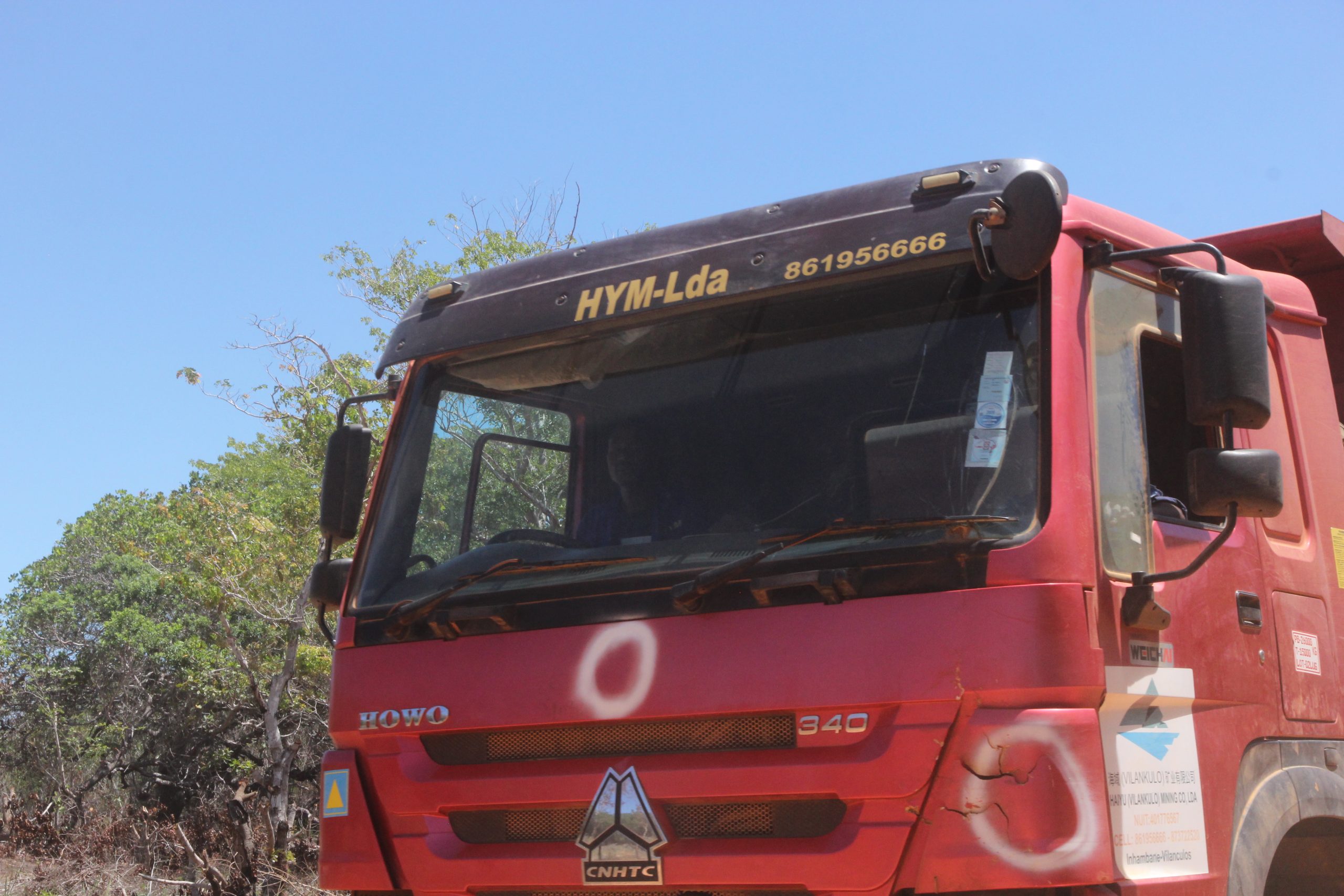
By Estacio Valoi and Luís Nhachote An investigation into territory, power, and the future in Inhambane - Haiyu rec
By Estacio Valoi and Luís Nhachote
An investigation into territory, power, and the future in Inhambane
– Haiyu received our questions over a month ago to exercise its sacred right to a response, but has so far declined to answer
In Vilankulo, an incomparable paradise on the coast of Inhambane, famous for being the main departure point for the Bazaruto archipelago, the landscape is changing rapidly in some places, far from public scrutiny.
Since 2025, heavy machinery has been operating on the coastal dunes of this district in Inhambane province. Heavy sand extraction is already underway. It was not announced with much public debate. It did not take center stage on the national agenda. But on the ground, the transformation is visible. Excavators advance over dunes near the coastline. Trucks circulate continuously between extraction sites. In some areas, residents report restrictions on movement near the concession zones.
The operation is led by Haiyu Mozambique Mining Co. Lda, a subsidiary of a mining group with predominantly Chinese capital, holding concessions for the extraction of minerals such as ilmenite and zircon, resources highly valued on the international market.
Documents and records obtained or consulted by the Center for Investigative Journalism (CJI) point to a large-scale project: long-term concessions, reserves estimated at tens of millions of tons, and investments valued at hundreds of millions of dollars.
But there is a central gap: the scale of the project has not been accompanied by a commensurate level of public transparency. Who authorized the mining? Under what conditions? Based on what studies? And under what oversight mechanisms? The questions begin precisely there.
Mining Underway, Oversight Uncertain
In the coastal dunes, the activity is far from discreet. In February, our CJI team visited the site and observed intensive excavation, constant truck traffic, and the systematic removal of sand from natural formations that act as barriers against coastal erosion. These dunes are not just sand. They function as natural infrastructure for territorial protection.
Their removal raises a direct question: Who is monitoring the impacts—and with what independence?
Environmental licensing has become one of the project’s most opaque aspects. Local sources and civil society organizations question whether the Environmental Impact Study was properly validated; whether public consultations were truly inclusive; and whether environmental conditions are being met.
There are troubling patterns .
Previous studies related to mining operations along that coastal strip were challenged due to technical flaws and insufficient community involvement.
Despite this, mining activities proceeded without updated public reports and without visible accountability mechanisms.
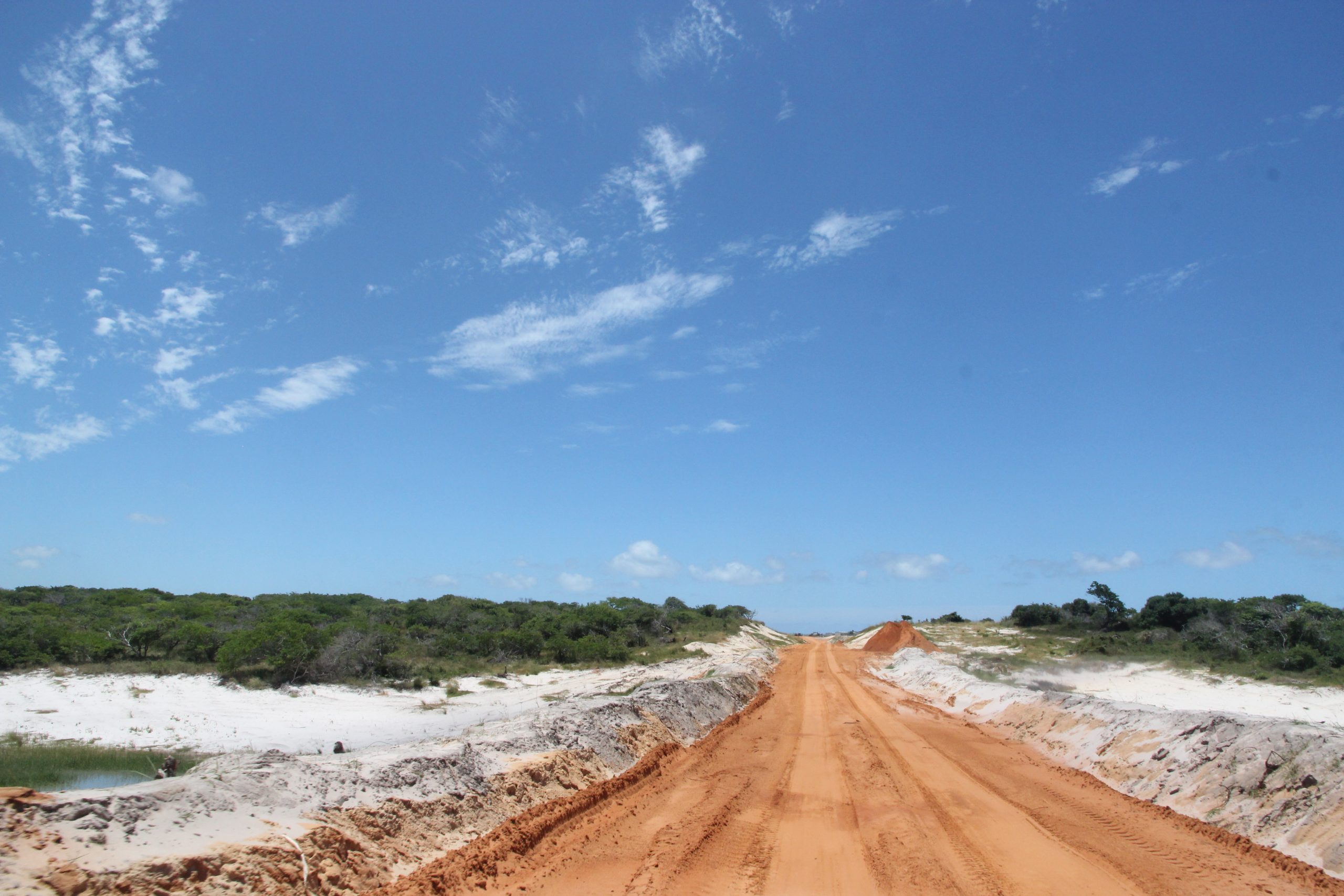
Foto: Estacio Valoi/Vilankulo
In the village of Belane, Chipanzane, some residents describe a growing atmosphere of restriction and tension near the mining area.
Local residents report that access to certain areas near the beach has been restricted by the mining company’s private security guards. Some describe incidents involving warning shots fired from firearms.
“They said no one was allowed to pass,” said one resident.
These reports could not be independently verified with the company by the time of this publication.
Mining concession data reviewed by the CJI indicate that approximately 70% of the coastline of Inhambane Province—roughly 353,000 hectares—has already been allocated for the prospecting and mining of heavy sands in the province’s ten coastal districts.
The concession areas include zones near: the Bazaruto Archipelago National Park; the Vilankulo Wildlife Sanctuary; Inhambane Bay; the Quissico Lakes; and Poelela Lagoon. At the same time, a vast offshore area has been set aside for seismic testing and hydrocarbon exploration. Without much public debate, a silent transformation appears to be underway along the Mozambican coast. And the question becomes inevitable:
Who is deciding the future of the Inhambane coast—and in the name of what?
Licenses, Lobbyists, and the State
To attract foreign direct investment, the Mozambican government has introduced a series of tax incentives for the extractive sector over the past few years, including temporary exemptions, customs benefits, and tax breaks.
The result has been rapid growth in concessions awarded to foreign companies, particularly in coastal areas considered strategic.
Critics of the model argue, however, that the economic benefits remain concentrated among political and business elites, while local communities continue to be exposed to the social and environmental impacts of mining.
In Inhambane, this expansion raises a question that is increasingly on the minds of environmental organizations, tour operators, and local communities:
To what extent is the state balancing environmental conservation and mining operations?
In 2024, during discussions with the research team, the deputy director of Haiyu Mozambique Mining Co. Lda, Juyi Li (“Francisco”), stated that the company
possessed:
● DUAT;
● an environmental license;
● and official authorization for the extraction and sale of heavy sands.
According to him, the documents would be sent to the CJI at a later date.
As of the time of publication, this has not happened.
At the same time, sources linked to the environmental sector claim that previous studies related to mining operations in that coastal area raised significant technical concerns.
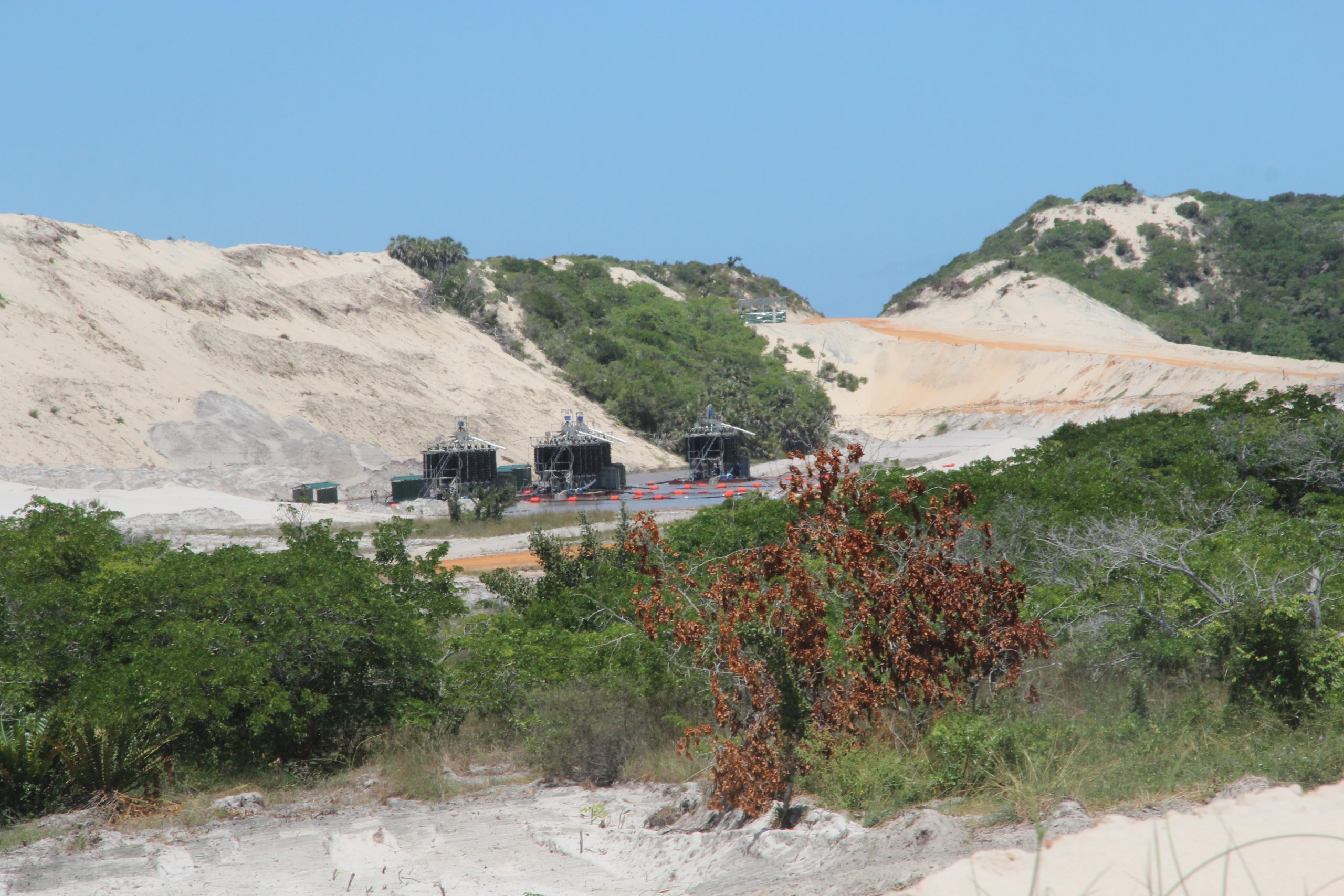
Foto; Estacio Valoi/ mina da HM /Vilankulo
The Contested EIA
An Environmental Impact Assessment (EIA) associated with the project has become one of the most controversial aspects of the process.
Documents reviewed by the CJI show that technical opinions and contributions from various entities raised serious doubts regarding: the project’s environmental viability; the quality of the technical assessment; and the risks to critical coastal ecosystems.
The study warned of: destruction of coastal dunes; marine contamination; siltation; risks to coral reefs; dispersion of mineral dust; and potential impacts on protected biodiversity.
One of the conclusions of the technical opinion was particularly severe:
“The project itself is completely unsuitable for this area.”
Environmental experts also assert that the wastewater flows projected in the project were presented in the EIA in an overly simplified manner, without sufficient technical information for a robust independent assessment. The document also questions the potential impacts of the suction dredging method proposed by the company, warning of the risk of siltation, marine contamination, and destruction of coral reefs. The concerns are not limited to land-based mining.
Alongside heavy sand mining, proposals have emerged for offshore seismic testing in an ecologically sensitive area near internationally recognized conservation zones.
Environmental experts warn that these projects could affect: fragile marine ecosystems; endangered species; fish populations; and the last viable population of dugongs in the Western Indian Ocean.
In Inhambane province, where a large part of the population depends directly on the sea, fears are growing.
Natural Justice, Justiça Ambiental, and other organizations have announced legal initiatives and formal requests for clarification to the Ministry of Mineral Resources and Energy (MIREME) and the National Directorate of the Environment (DINAB).
The organizations intend to question: the validity of environmental procedures; compliance with legal requirements; and the legality of the exploration already underway.
According to a press release dated July 31, 2025, reviewed by CJI, representatives of environmental organizations met with provincial and district authorities in
Inhambane to present aerial images of the active mining operation and express concerns regarding: environmental damage; regulatory gaps; and potential negative impacts on the regional tourism economy.
According to the same briefing note, the provincial governor reportedly requested an aerial survey of the area to prepare his own report for the Office of the President.
Meanwhile, mining activity continues on the ground. And the issue is no longer just environmental. It has become institutional.
A Fenced Territory
While concerns outside the concession area focus on the environment and permitting, complaints regarding working conditions and the treatment of local workers are beginning to emerge within the operation.
The CJI has collected multiple testimonies from workers describing an environment marked by a lack of professional categories, overlapping roles, and intimidation in response to complaints.
“Here, you do everything,” says one worker. “Today you’re a mechanic, tomorrow a cook, then an electrician.”
Others describe a lack of career advancement and wages that make no distinction between different technical roles.
“You have to train the new hires, and they already earn the same as you.”
The complaints extend to food conditions and the relationship with supervisors.
“The food isn’t even cooked properly sometimes.” “When we complain, they threaten to fire us.”
The accounts also describe an environment of psychological pressure and treatment considered degrading by some of the workers interviewed. To date, the company has not publicly responded to the allegations. The complaints arise within a broader context of local tension.
In communities near the operation, residents report restrictions on movement and a growing sense of exclusion in areas traditionally used for fishing, beach access, and community activities.
In Inhambane province, where about 60% of the population depends directly on coastal areas for daily subsistence, the fear is that environmental impacts will quickly turn into an economic and social crisis.
Environmental experts also warn of potential impacts on the last viable population of dugongs in the Western Indian Ocean.
Environmental organizations argue that seismic testing and coastal mining could affect: ecological corridors; marine reproduction; fish populations; and highly sensitive ecosystems.
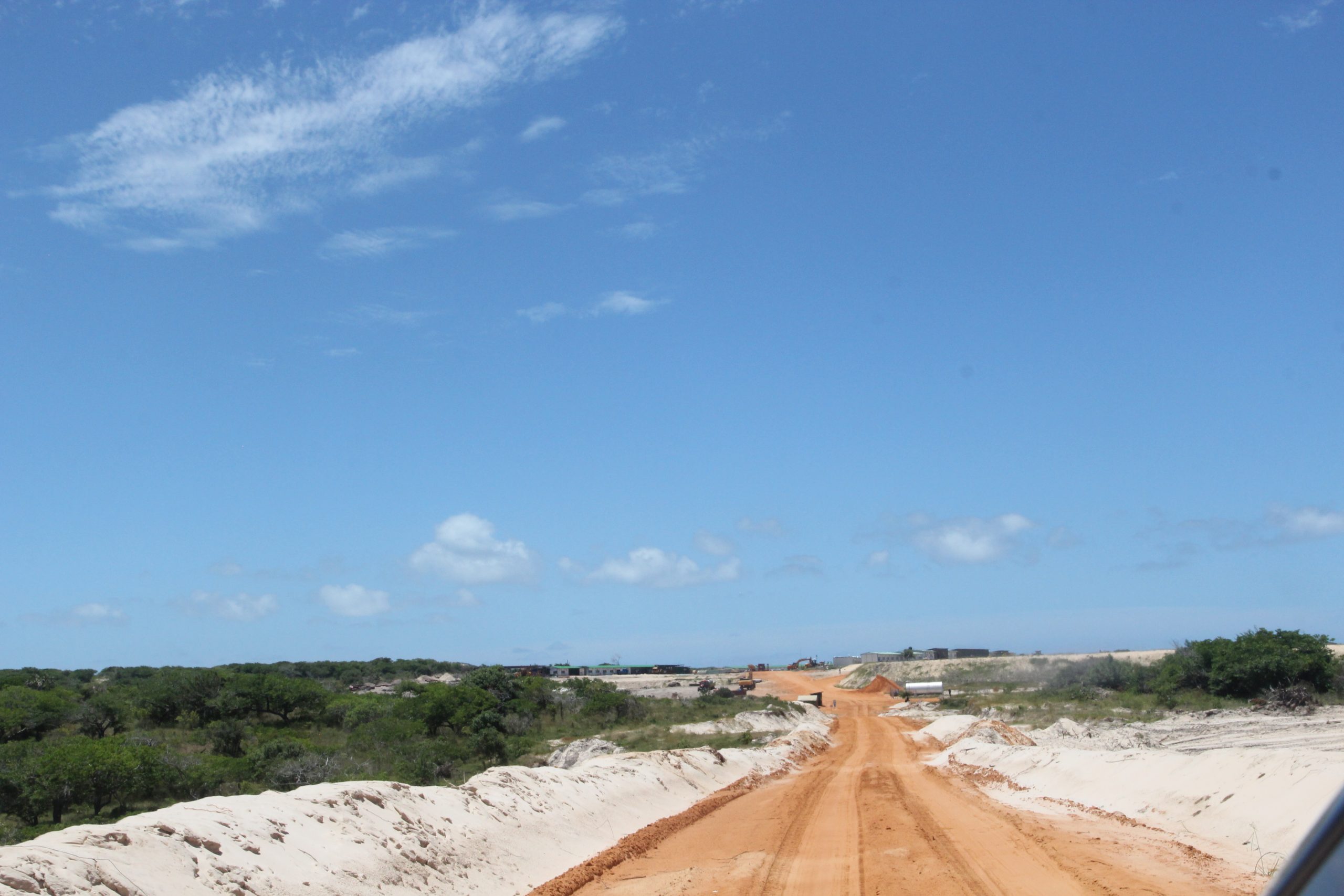
Foto Estacio Valoi:/Vilankulo/Belane, Chipanzane/Cacela da mineradora HM
For vulnerable fishing communities, a decline in fish stocks would mean a direct loss of income and livelihood. For many local residents, mining arrived before clear explanations were provided. And in various parts of the coast, the prevailing sentiment is no longer just economic anticipation. It is uncertainty.
The Haiyu Precedents
Concerns in Inhambane take on greater significance when viewed in light of Haiyu Mozambique Mining Co. Lda.’s track record in other regions of the country.
Between 2011 and 2015, the company operated in Nagonha, Angoche District, Nampula Province. In 2018, Amnesty International published a report documenting allegations of: destruction of coastal dunes; flooding; dumping of mining waste; loss of land; displacement of families; and impacts on fishing communities.
According to the report, approximately 290 people were left homeless following environmental changes associated with mining operations. The document also describes: the destruction of Miombo coastal forests; the filling in of lagoons; changes to watercourses; and the exposure of communities to potentially toxic waste.
Now, in Inhambane, environmental organizations and sectors of civil society are questioning whether a similar pattern might be repeating itself.
The sheer size of the concession raises additional concerns.
Sources consulted by CJI point to plans for logistical expansion associated with mining activities, including potential port infrastructure for mineral exports.
If confirmed, these plans would completely alter the scale of the project.
The operation would no longer be just a coastal mine but would become part of an extractive-industrial corridor with a structural impact on the Inhambane coastline.
It is precisely on this coast that the following coexist: fragile marine ecosystems; international tourism; artisanal fishing; environmental conservation; and thousands of families dependent on the local ecological balance.
Hundreds of millions of dollars have been invested over the past decades in Inhambane’s maritime landscape, particularly in sustainable tourism, environmental conservation, and the blue economy. Tour operators and environmental organizations now fear that the simultaneous advance of mining, seismic testing, and potential petrochemical infrastructure will irreversibly compromise one of Southern Africa’s most important coastal ecosystems.
The question that emerges at the end of this first part of our investigation no longer concerns mining alone. It concerns the future of the Mozambican coast itself.
Who is deciding this transformation—and on whose behalf?
Haiyu received our questions over a month ago to exercise its right to a fair hearing, but has so far not deigned to respond.
 English
  Portuguese
COMMENTS